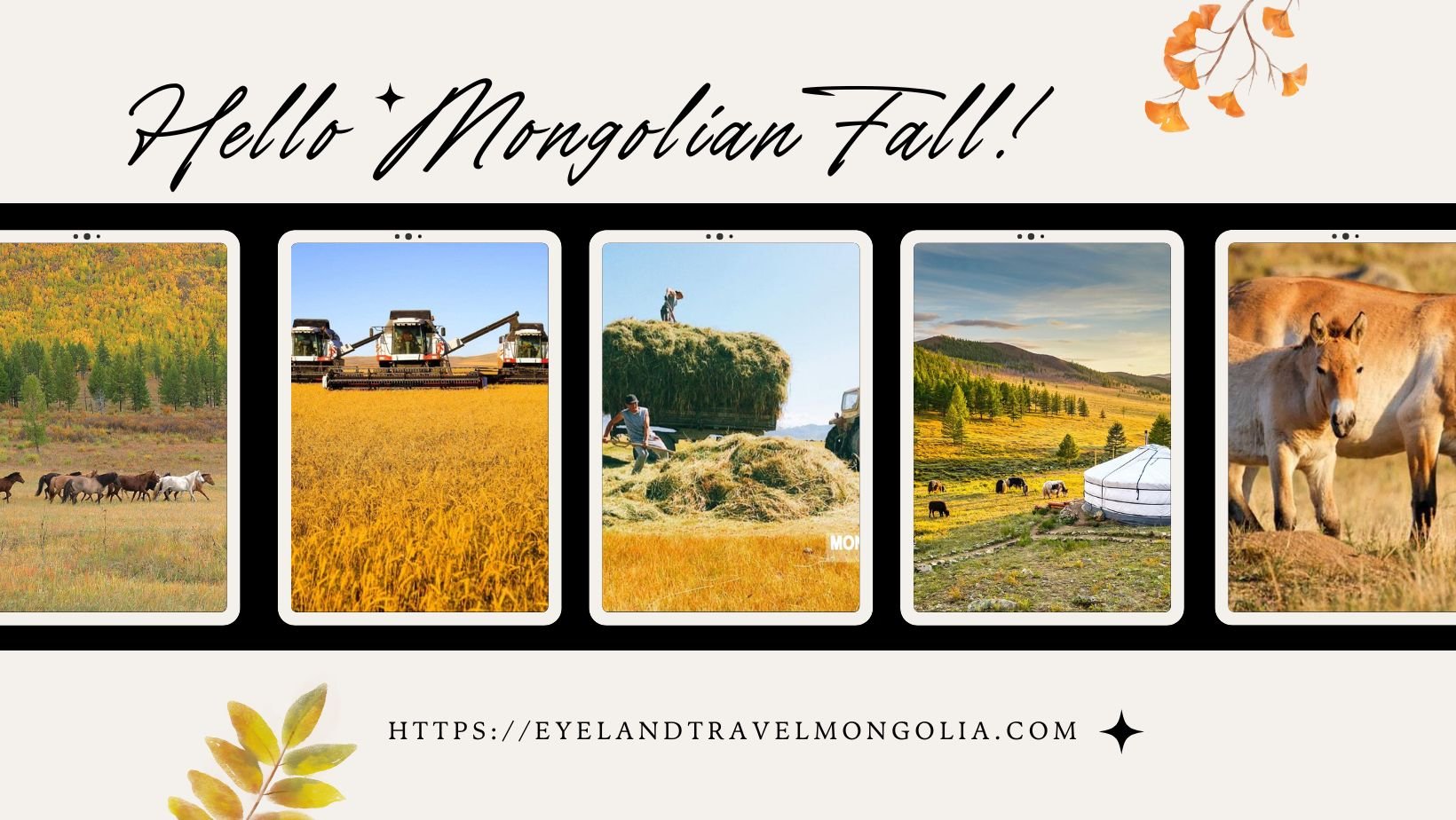
Autumn in Mongolia is pure magic! The endless steppe turns golden, larch forests glow yellow, and the sky feels bigger than ever. Crisp air, cozy fires, and herds of horses roaming free—there’s nothing like it!
What Mongolian do in the fall?
1. Golden Landscapes
The vast steppes and forests turn golden yellow and deep red, especially in regions like the Khentii and Khangai mountains. The larch trees are particularly stunning as their needles turn bright gold.
2. Mongolian Harvest Festivals
Autumn is the time for harvest celebrations. Families gather to prepare for winter, making traditional foods like dried curds (aaruul) and preserved meats.
3. Naadam in the Countryside
While the main Naadam festival is in July, smaller local Naadams are often held in autumn, featuring wrestling, horse racing, and archery.
4. Nomadic Preparations for Winter
Nomadic herders are busy preparing their livestock and homes for the harsh winter. This includes moving to winter pastures and reinforcing their gers (yurts).
5. Tsagaan Idee Preparations
Although Tsagaan Sar (Lunar New Year) is in winter, many families start preparing special dairy products and dried foods in autumn.
6. Crisp, Clear Skies
The weather is cool and dry, with clear blue skies—perfect for hiking, horseback riding, and photography.
7. Wildlife Watching
Autumn is a great time to spot wildlife, such as wild sheep, ibex, and migratory birds, especially in national parks like Hustai and Gorkhi-Terelj.
8. Traditional Clothing
As temperatures drop, people start wearing their beautiful deels (traditional Mongolian coats), often made of colorful, warm materials.
If you’ve never seen Mongolia in the fall, you’re missing out on a breathtaking palette of colors and peaceful moments by the lakes. Who else loves this season?