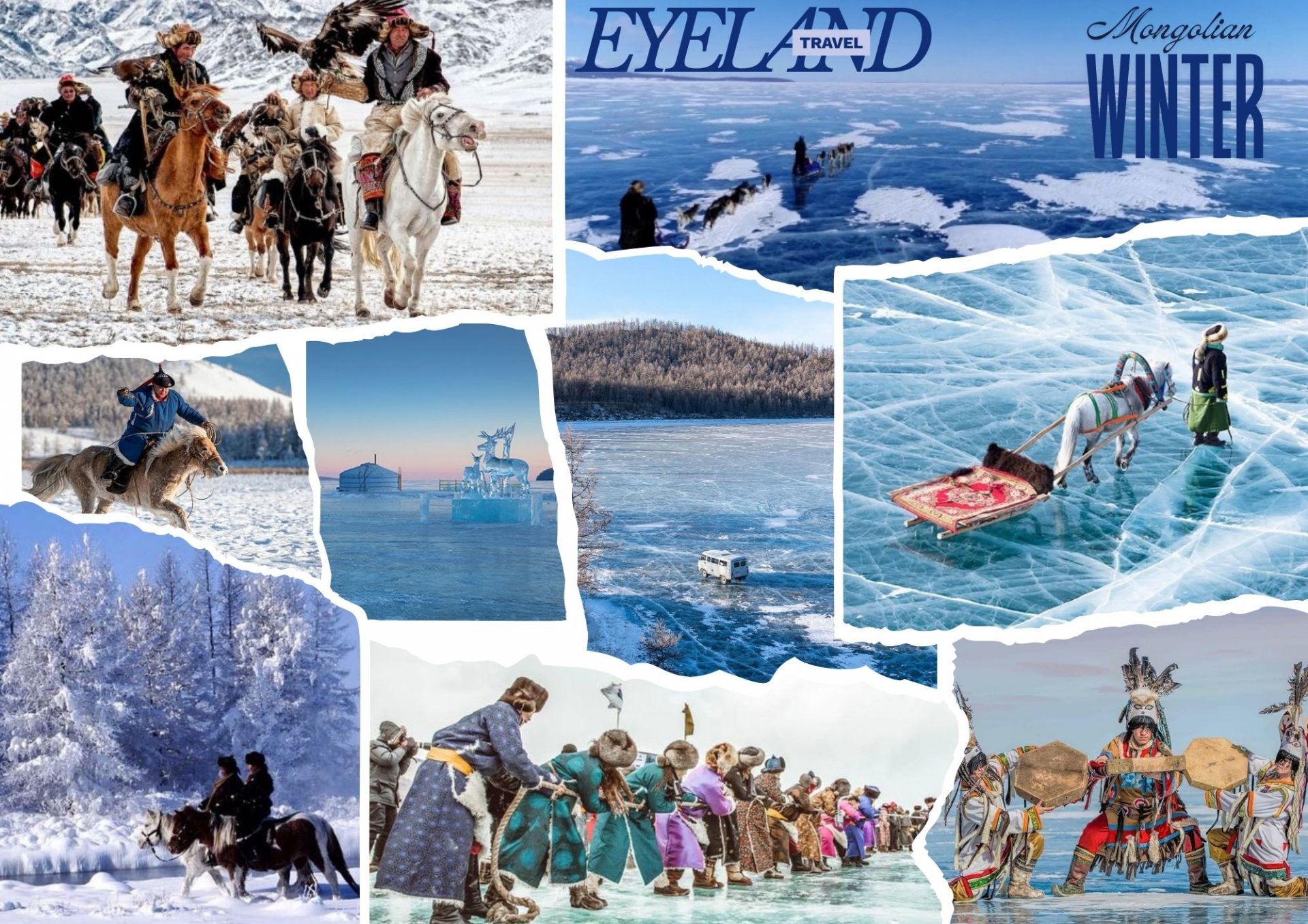
Mongolian Winter Festival Highlights
1. Ice Festival (Khuvsgul Lake)
• Location: Khuvsgul Lake, northern Mongolia
• When: February or March
• Activities: Ice skating, horse sled races, ice sumo wrestling, ice sculpture contests, shamanic rituals, and traditional Mongolian games.
• Unique Feature: The festival takes place on the frozen surface of Mongolia’s largest freshwater lake, creating a magical winter landscape.
2 . Camel Festival (Bayan-Ölgii and Gobi)
• Location: Bulgan, South Gobi Province
• When: February or March
• Activities: Camel races, camel polo, traditional music and dance, best-dressed camel contests, and displays of nomadic culture.
• Unique Feature: Celebrates the Bactrian camel and the nomadic herders who depend on them.
3. Tsagaan Sar (Lunar New Year)
• When: February or March (date varies by lunar calendar)
• Activities: Family gatherings, traditional food named Buuz (like dumplings), exchanging gifts, and wearing traditional clothing (deel).
• Unique Feature: One of Mongolia’s most important holidays, marking the end of winter and the beginning of spring.
4. Eagle Festival (Winter Edition)
• Location: Bayan-Ölgii Province
• When: March (smaller than the autumn festival)
• Activities: Golden eagle hunting demonstrations, traditional Kazakh games, and cultural performances.
• Unique Feature: Showcases the skills of Kazakh eagle hunters in the snowy Altai Mountains.
Experiencing a Mongolian Winter Festival
• Dress Warmly: Temperatures can drop below -30°C, so thermal clothing is essential.
• Try Traditional Foods: Buuz (steamed dumplings), Khuushuur (fried meat pies), and Airag (fermented mare’s milk).
• Participate in Games: Join in or watch traditional games like Shagai (ankle bone shooting) and wrestling.
• Capture the Scenery: The snow-covered steppes, frozen lakes, and colorful costumes make for stunning photography.
• Learn Local Customs: Engage with nomadic families, learn about their winter survival skills, and experience Mongolian hospitality.